At The École, caring for our community also means caring for the world around us. Environmental awareness and sustainable development are an important part of school life, giving our students opportunities to understand the challenges facing our planet and to discover how they can play an active role in addressing them.
In 2026, The École was awarded Level 1 of the EFE3D label (Établissement français à l’étranger en démarche de développement durable), recognizing our commitment to education for sustainable development and the work already underway across our school community.
Awarded within the AEFE network, the EFE3D label recognizes schools that integrate sustainable development into their educational practices and the school’s wider life and operations. Level 1 recognizes a school’s active engagement in this process and establishes a foundation for continued progress toward Levels 2 and 3—levels that The École is committed to working toward in the years ahead.
A Whole-School Commitment
Sustainability at The École is a collective effort involving students, teachers, staff, families, and partners throughout New York City.
Our Eco-Delegates in Elementary & Middle School give students an active voice in this work. They help identify areas where our school can make a difference, raise awareness among their classmates, and participate in projects that connect environmental learning with action. Their activities have included visiting a local recycling center to learn what happens to bottles and cans after they are collected and how materials can be given a second life.
Our staff Green Committee brings together colleagues who are committed to making sustainability an increasingly integral part of school life. The committee helps develop and coordinate initiatives, share ideas, and encourage environmentally responsible practices across our buildings.
The École also works with local organizations and partners to connect what students learn at school with environmental issues in their city and the wider world. Our numerous local partnerships, along with our collection and recycling initiatives and communication around sustainable development, were among the strengths specifically recognized by the EFE3D jury.
Sustainability in Action
Environmental education begins with our youngest students and develops as they move through the school. Just as importantly, sustainable habits are part of the everyday rhythm of life at The École. Every student composts their food scraps after lunch each day, making the responsible handling of food waste a familiar daily practice throughout the school.
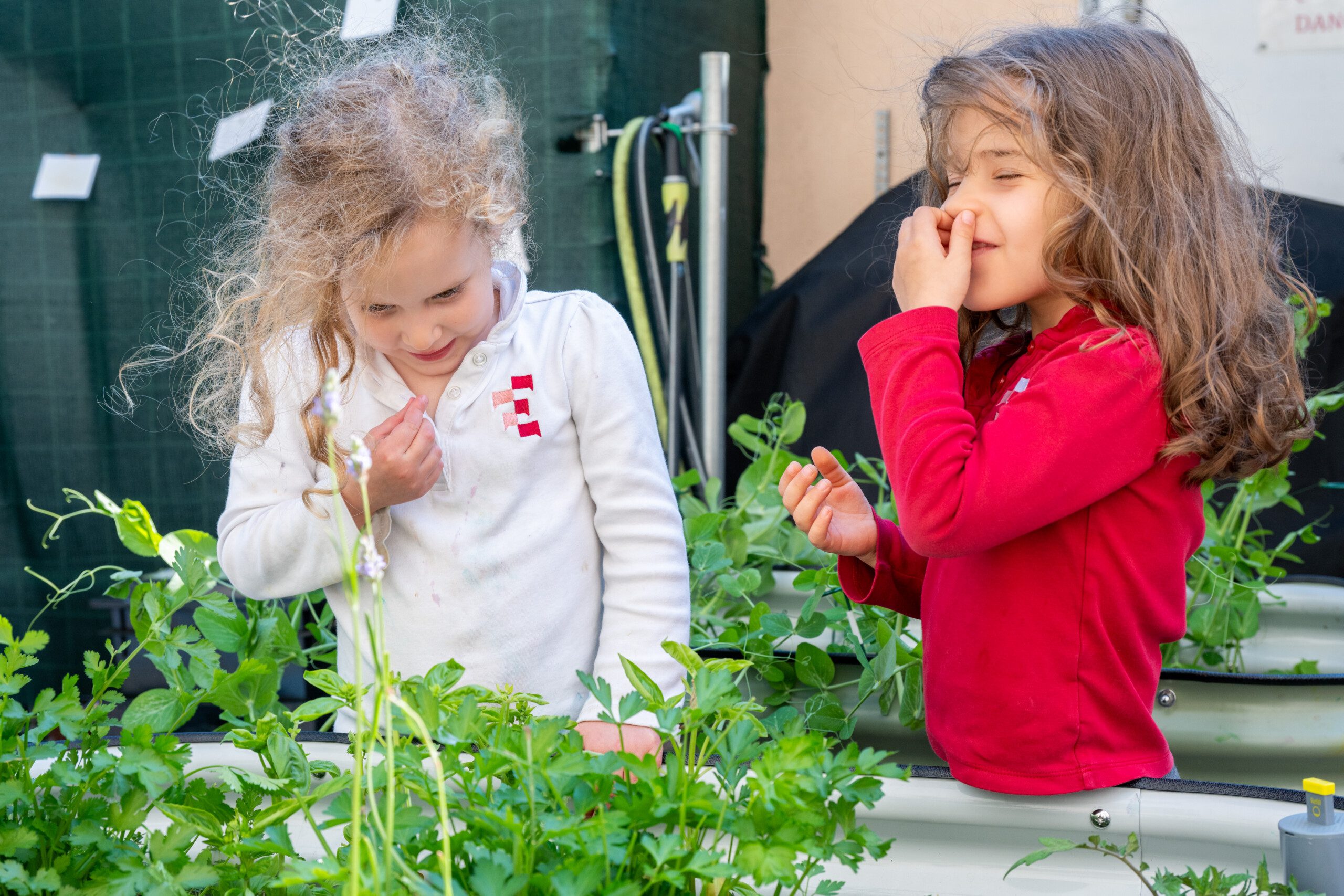
Through our gardening program with Farmer Gaia, Maternelle students have opportunities to explore the natural world firsthand. They learn about plants, seeds, pollinators, composting, and the natural cycles that connect them. Activities such as saving seeds after the fall harvest and observing the role of insects and worms make larger environmental concepts tangible and accessible to young children.
These experiences continue in Elementary. Students grow plants in their classrooms, investigate what plants need to thrive, study and dissect flowers to understand their different parts, learn about composters, and even make their own compost. Through practical experiences like these, sustainability becomes something students can observe, investigate, and participate in rather than simply a subject to learn about.
As students grow older, opportunities such as the Eco-Delegates program encourage them to take greater responsibility for environmental initiatives themselves, sharing what they learn with their peers and helping to shape sustainable practices within the school community.
Learning, Acting, and Looking Ahead
Receiving Level 1 of the EFE3D label is an important milestone, but it is also a starting point.
The jury described The École’s application as a “solid Level 1” and highlighted the momentum created by initiatives already in place as well as those being developed. It particularly encouraged us to continue strengthening the role of our Eco-Delegates, connect sustainable development even more closely with classroom learning, broaden our work across the United Nations Sustainable Development Goals, and develop larger collaborative projects with other schools in New York.
These priorities will help guide the next stage of our work as we continue to develop our environmental program and work toward EFE3D Levels 2 and 3.
For our students, sustainability is ultimately about more than individual environmental projects. It is about developing the knowledge, curiosity, and sense of responsibility to understand the world around them—and learning that, at every age, they can play a part in taking care of it.